

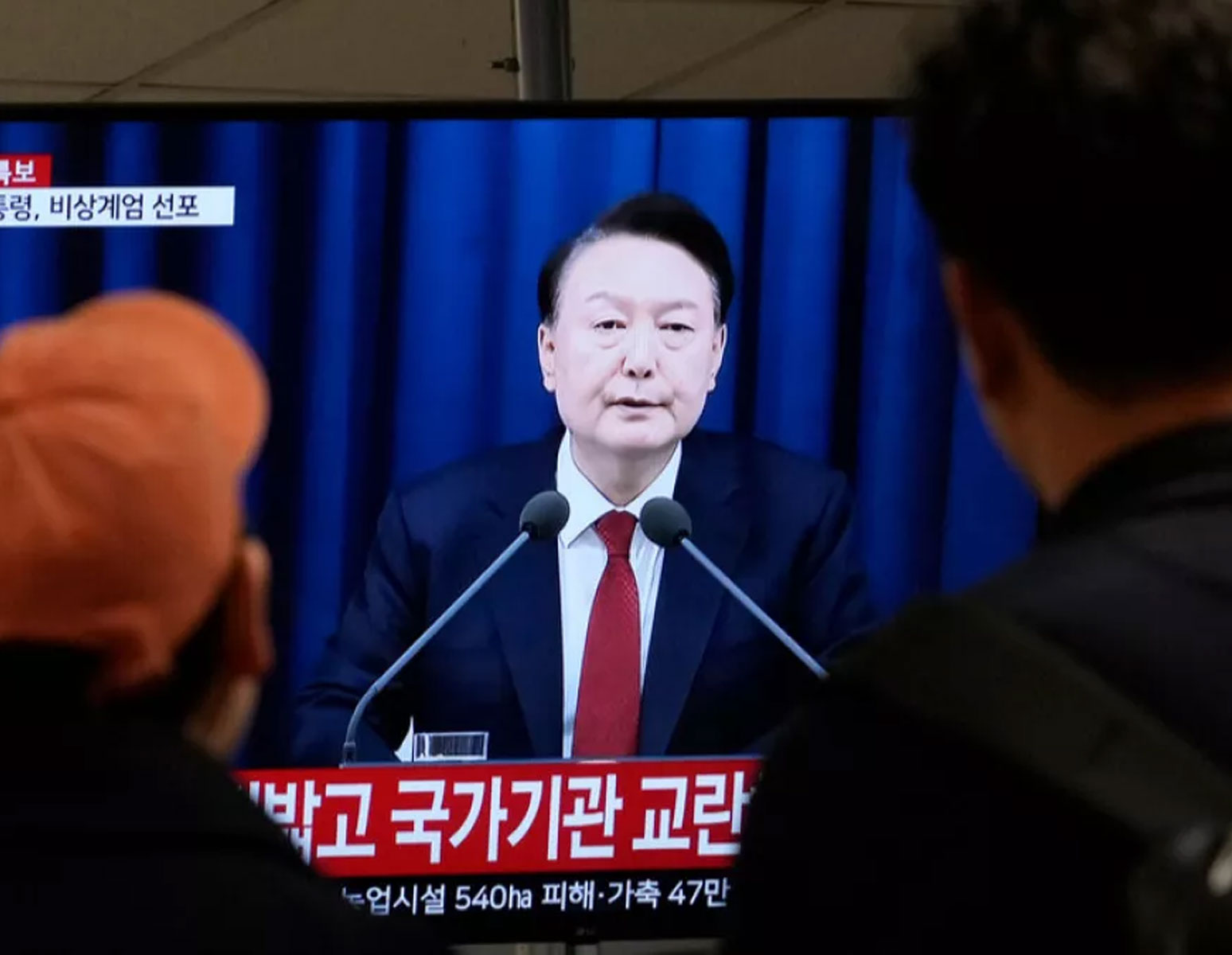
South Korean President Yoon Suk Yeol is clinging to power as his party declared they would oppose an impeachment motion following his shocking imposition of martial law earlier this week. The move, which suspended civilian rule and involved deploying troops and helicopters to parliament, was swiftly overturned after lawmakers voted it down in a dramatic parliamentary session late Tuesday.
The decision to impose martial law stunned not only South Korea but also international allies, with Washington expressing surprise after learning about it via television broadcasts. The opposition immediately filed an impeachment motion, accusing Yoon of gravely violating the constitution and the law. A vote on the motion is scheduled for Saturday at 7pm.
In a dramatic turn, South Korean police announced they were investigating Yoon for “insurrection”—a serious crime that could lead to the death penalty, a charge that transcends presidential immunity. The investigation follows a complaint filed by the opposition against Yoon and other key figures involved in the martial law declaration.
The opposition holds a majority in the 300-member legislature and only requires a few defections from Yoon’s People Power Party (PPP) to secure the necessary two-thirds majority for impeachment. Despite the political pressure, PPP leader Han Dong-hoon stated that he would block the impeachment, with all 108 members of the party committed to rejecting the motion.
A recent poll revealed that 73.6% of South Koreans support the impeachment. The mood is tense, and further protests are expected in the coming days. If the impeachment passes, Yoon will be suspended pending a Constitutional Court ruling, which could lead to new elections within 60 days if the court upholds the motion.
Yoon, who has faced multiple crises since taking office in 2022, has not appeared publicly since his televised address early Wednesday morning. His office confirmed the resignation of Defence Minister Kim Yong-hyun, while other key figures, including Interior Minister Lee Sang-min, remain in their positions. Prosecutors have reportedly banned Kim from leaving the country.
The martial law, which was declared on Tuesday, was intended to protect South Korea from what Yoon described as threats posed by North Korea and anti-state elements. However, the decree, which banned political activities and gatherings, led to a chaotic scene at the National Assembly as lawmakers fought back against the military’s attempts to lock them out.
Protests erupted around Yoon’s office in Seoul, with thousands of demonstrators demanding his resignation. MP Kim Seung-won, who introduced the impeachment motion, called the martial law an “unforgivable crime” and insisted it was a tactic to evade investigations into alleged corruption.
The United States, which has about 30,000 troops stationed in South Korea, expressed deep concern over the martial law declaration, while praising the National Assembly for quickly rescinding it. China and Russia also expressed alarm at the situation, with both nations urging caution. Japan, which has had a complicated relationship with South Korea, is closely monitoring the unfolding crisis.
As the political drama continues, the fate of President Yoon remains uncertain.