
Interim Foreign Minister Jalil Abbas Jilani of Pakistan addressed the United Nations General Assembly, expressing deep concerns over the escalating tensions with Afghanistan. Jilani called on Afghanistan’s incumbent government to take “solid practical steps” against the Tehreek-e-Taliban Pakistan (TTP), a proscribed militant organization responsible for ongoing attacks within Pakistan originating from Afghan soil.
Speaking to TRT World on the sidelines of the UN General Assembly in New York, Jilani emphasized the need for Afghanistan to fulfill its commitments regarding terrorism. He stated, “They committed to not allowing Afghan soil to be used against other countries,” and the continuation of TTP attacks in Pakistan originating from Afghanistan remains a significant concern for Pakistan and regional countries.
While Pakistan desires to see a stable and prosperous Afghanistan, Jilani highlighted the presence of various terrorist groups, including the TTP and ISIS-K, based in Afghanistan, posing a significant dilemma. He underlined that these groups are a major concern not only for Pakistan but for the entire region.
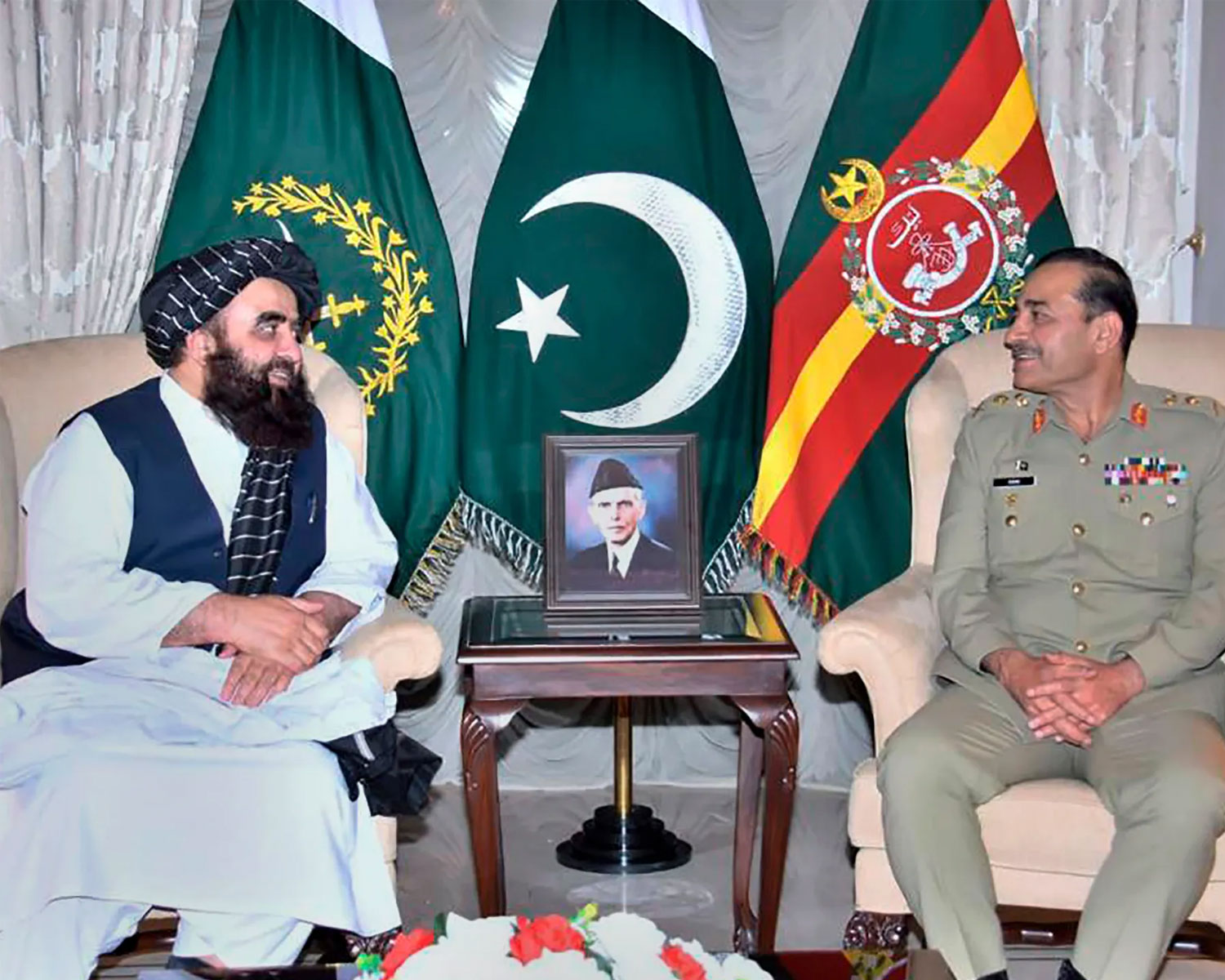
Jilani revealed that Pakistan has engaged in dialogues with the interim Afghan Taliban government, urging them to honor their commitments to Pakistan and the international community, ensuring that Afghan soil is not used for attacks against other nations.
Switching to economic matters, Jilani stressed the link between economic prosperity, the welfare of the people, and a stable political environment. He expressed hope that efforts, including the Special Investment Facilitation Council and various reforms, would lead to both economic and political stability in Pakistan.
Regarding the rising fuel prices and inflationary pressure, Jilani acknowledged the link to international gas prices, emphasizing that when global gas prices decrease, the benefits will be passed on to the people.
Jilani reiterated Pakistan’s stance on conflict resolution, emphasizing the importance of peaceful negotiations over war. He noted that the ongoing conflict, which has lasted nearly two years, has created nervousness and economic crises in many countries.
Shifting the focus to foreign investment, Jilani expressed confidence in the Special Investment Facilitation Council and highlighted the tremendous cooperation from Gulf states such as Saudi Arabia, Qatar, and Bahrain. He pointed out that various sectors, including agriculture, IT, and mining, have garnered interest from Gulf countries, with several Memorandums of Understanding (MOUs) expected to be signed.
Jilani dismissed claims of a “political crisis” in Pakistan, stating that the country follows a democratic process, and the main task is to hold free and fair elections when announced by the Election Commission of Pakistan.
In discussing United Nations reforms, Jilani emphasized the need for a criteria-based approach to enlarge UN membership democratically. He expressed concerns over India’s violation of UNSC resolutions, particularly on the Kashmir issue, and urged the world community to address the ongoing human rights violations in Kashmir.
As tensions simmer between Pakistan and Afghanistan and Pakistan aims to boost its economic prospects, Jilani’s plea at the UN sheds light on the critical issues facing the region and the global community’s role in finding peaceful solutions.