

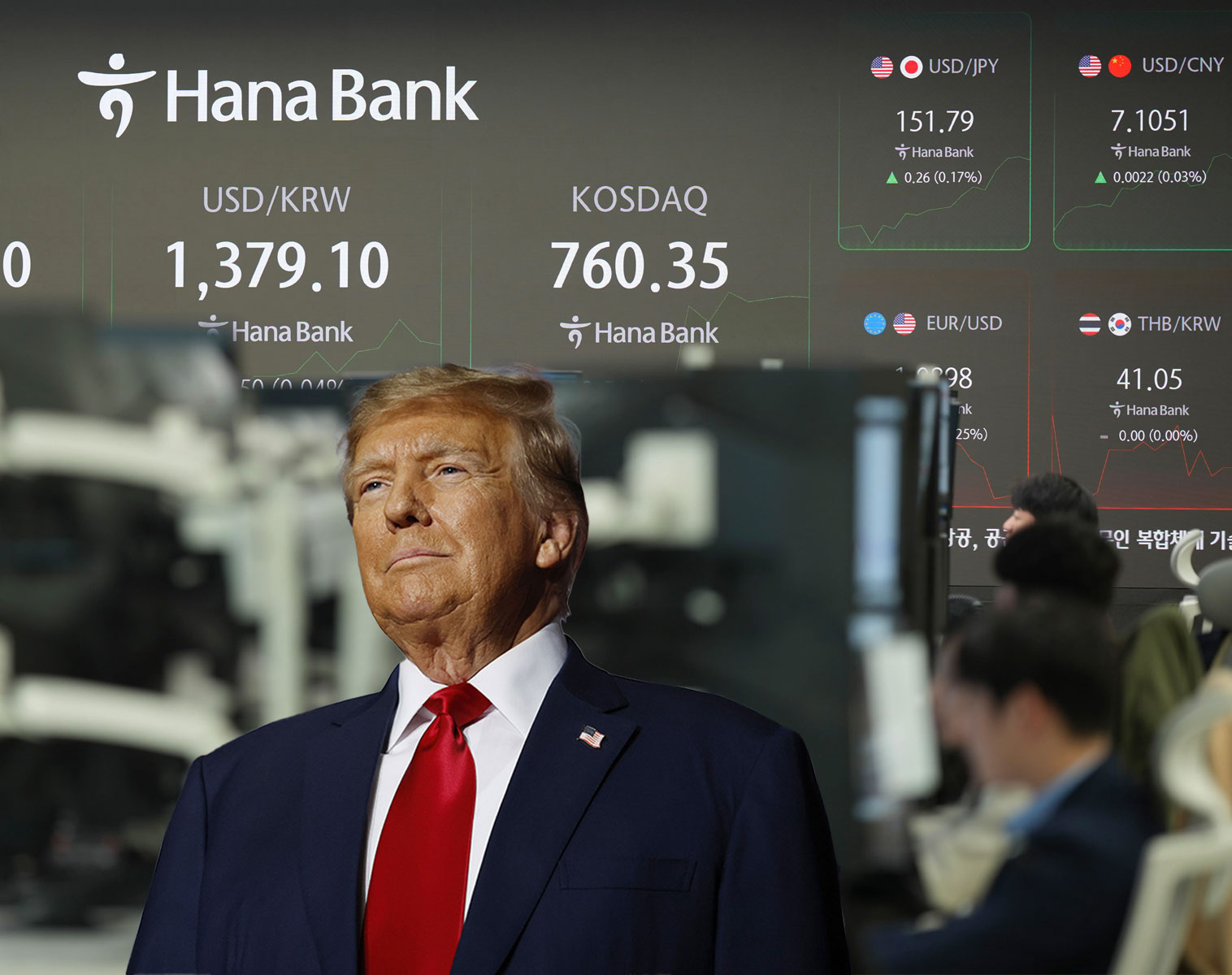
Asian and global financial markets saw significant volatility on Wednesday as the U.S. dollar surged following projections that Republican Donald Trump had won the U.S. presidential election, defeating Democrat Kamala Harris. According to Fox News, Trump claimed victory, while other media outlets have yet to confirm the final results. With Republicans projected to control at least one chamber of Congress, the political shift sparked a ripple effect across global markets.
In Asia, the Singapore dollar dropped by 1.3%, hitting a three-month low and marking its worst session since August 2015. Thailand’s baht experienced an even sharper decline, falling 1.9% to a two-month low, the biggest single-day drop since February 2023. The Chinese yuan and Mexican peso—both sensitive to shifts in U.S. trade policy—also weakened. The peso reached 20.7080 against the dollar, a level unseen since August 2022, while the yuan slid 0.8%.
The U.S. dollar’s rally, the largest since March 2020, was driven by market expectations of policy changes under a Trump administration. Analysts predict his proposed tariffs and immigration restrictions could trigger inflation, pushing up bond yields and dollar strength. Ken Cheung Kin Tai, Mizuho Bank’s chief Asian foreign exchange strategist, noted, “Regional investors are especially concerned about potential tariff impacts on trade-dependent economies.”
Impact on Emerging Markets and Commodities
The ripple effects extended to other currencies, with Malaysia’s ringgit falling 1.5% and Indonesia’s rupiah slipping 0.7% to a nearly three-month low. Amid the market upheaval, Malaysia’s central bank left its interest rates unchanged, while Indonesia’s central bank pledged to intervene if excessive volatility threatened the rupiah’s stability.
The Pakistani rupee remained relatively stable, trading at Rs277.72 per U.S. dollar, according to the Exchange Companies Association of Pakistan (ECAP).
“Trump Trades” Gain Traction
U.S. stock futures, bitcoin, and the dollar spiked in anticipation of Trump’s re-election, with bitcoin surpassing the $75,000 mark for the first time. Investors turned to assets linked with Trump’s economic agenda, including banks and tech firms, while cash flowed out of emerging markets.
“Markets are positioning for a Republican sweep of the White House and Congress, eyeing possible tax cuts and deregulation in sectors like finance, energy, and tech,” said Matthew Ryan, head of market strategy at Ebury.
With Trump’s trade policies likely to reignite trade tensions, analysts predict further turbulence for Asia’s export-dependent economies.