
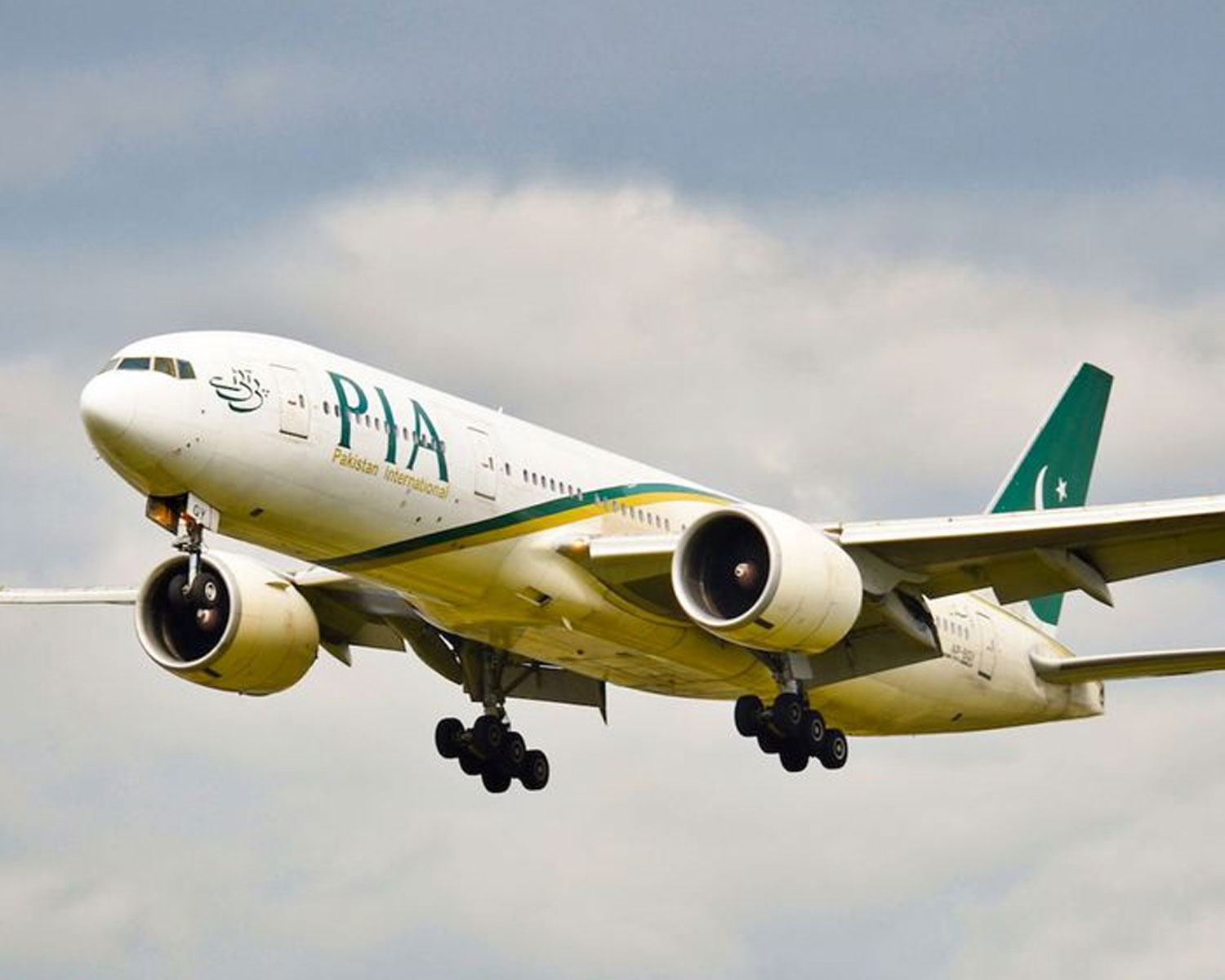
A potential catastrophe hangs over Pakistan International Airlines (PIA) as the Civil Aviation Authority (CAA) has failed to complete inspections on 35 of the airline’s aircraft. This failure could jeopardize the issuance of the necessary certificate for the airline’s flights in the coming year.
The CAA Flight Standards Directorate had previously raised concerns about technical issues with the planes and crew training, among other aviation-related matters. It was initially stipulated that these inspections, imposed by the CAA, must be completed by December 2023 when the air operator’s certificate was issued this year.
The list of planes awaiting inspection includes not only those currently grounded but also aircraft operated abroad and by the Pakistan Navy. The deadline for obtaining the air operator certificate for the next year is set for January 31, 2024.
The CAA director of flight standards has released a list detailing the 35 aircraft awaiting inspection. This list comprises 12 Boeing 777, 17 Airbus A320, and six ATR planes owned by PIA. Despite repeated requests from the CAA, PIA has yet to complete these essential inspections.
Currently, 15 PIA planes are grounded, two are abroad, and two are being utilized by another organization within the country.
In response to PIA’s financial woes, the federal government has formulated a comprehensive plan for the national carrier. This plan involves transforming PIA into a public-private partnership with foreign capital and restructuring the airline. Under this initiative, a new holding company will be established and registered with the Securities and Exchange Commission of Pakistan (SECP). All assets and liabilities of PIA will be transferred to this holding firm, effectively making PIA a debt-free subsidiary.
In line with this framework, 40% of PIA’s shares will be offered for sale in the international market to facilitate the public-private partnership, and management will be outsourced. Additionally, a foreign consultant will be engaged to oversee the restructuring process transparently.
The government’s plan will be executed in phases, with the first phase focused on separating the airline from debt and losses by establishing the holding company with the SECP. In the subsequent phase, the national airline will undergo restructuring and operate through the public-private partnership model.
Documents reveal that PIA has been grappling with significant losses, suffering a loss of Rs110 billion during the last one-and-a-half years of the previous government. Last year alone, the airline recorded a loss of Rs80 billion, and this figure is expected to surge to Rs112 billion this year. The documents also indicate that PIA’s annual losses could reach a staggering Rs259 billion by 2030.
The ban on UK and European flights, imposed due to safety concerns, has exacerbated PIA’s financial woes. The airline has incurred a collective loss of Rs215 billion because of this ban, with an annual loss of Rs71 billion attributed to it.
PIA’s troubles began in May 2020 when flight PK-8303 crashed in Karachi. Subsequently, then-aviation minister Ghulam Sarwar Khan announced the grounding of 262 airline pilots suspected of cheating on their exams. These events have cast a long shadow over the airline’s operations and reputation.