

A devastating fire tore through a five-storey building in central Johannesburg on Thursday, resulting in a catastrophic loss of life. According to the South African city’s emergency services, more than 50 people have been confirmed dead, with over 40 individuals sustaining injuries.
Among the injured were individuals who suffered from smoke inhalation and were promptly transported to local hospitals for urgent medical treatment, stated Emergency Management Services spokesman Robert Mulaudzi. The severity of the incident has shocked the nation, prompting an immediate response from emergency personnel.
“We are now on 63 fatalities and 43 people injured who were transported to various healthcare facilities,” Mulaudzi conveyed during an interview with South African broadcaster ENCA. He previously reported that the initial death toll stood at 52 casualties.
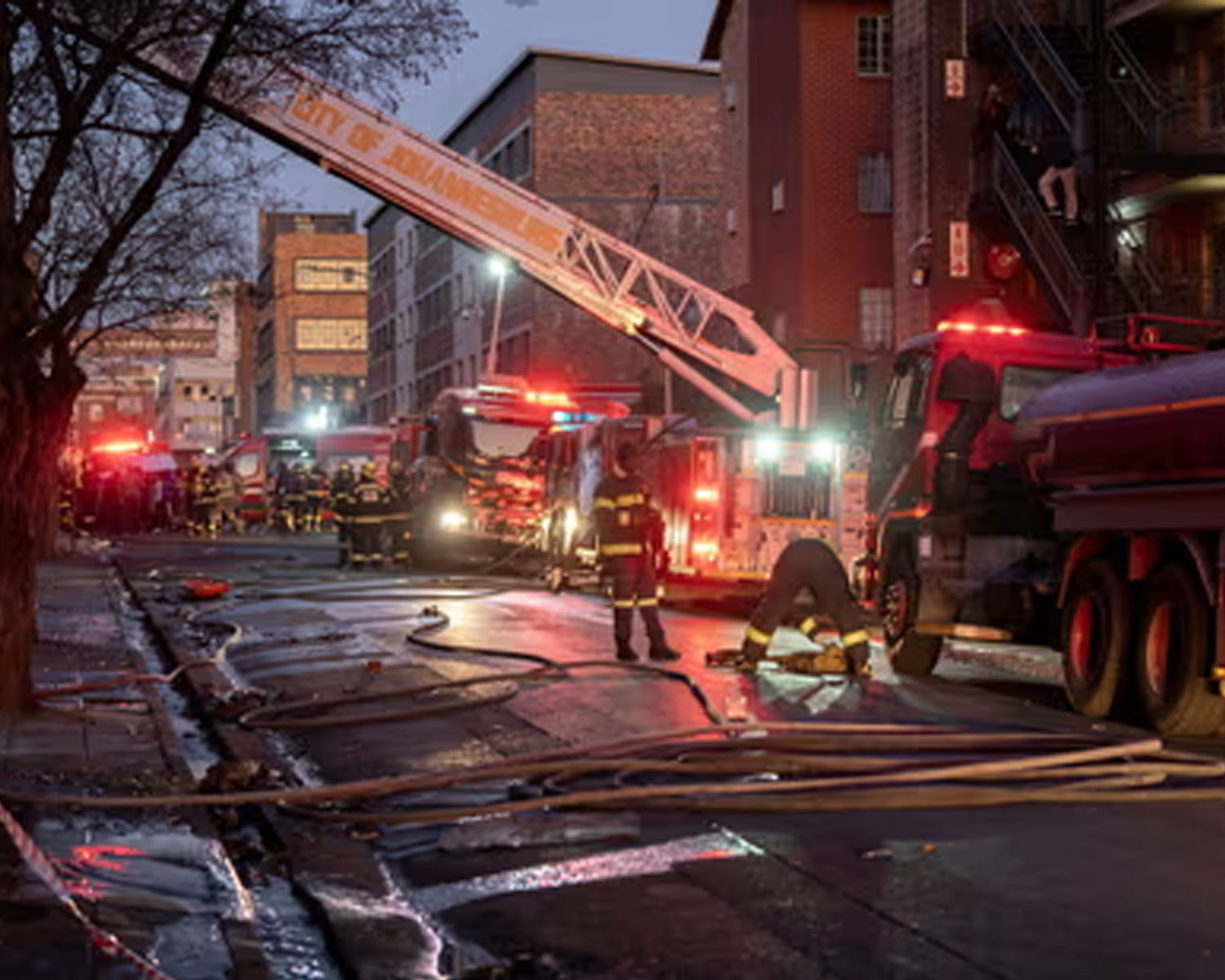
Although the exact cause of the fire remains undetermined, the blaze erupted overnight, catching residents and authorities off guard. Firefighters rushed to the scene, effectively extinguishing the flames and commencing search and recovery operations, as reported by AFP.
“We are moving floor by floor conducting these body recoveries,” Mulaudzi explained, acknowledging the grim reality that the death toll is expected to rise as the search continues.
Situated in a marginalized area that was once part of South Africa’s bustling business district, the building had been repurposed as an informal settlement. The tragedy has underscored the dire living conditions faced by many in the region.
Images broadcasted on television depicted fire trucks and ambulances gathered outside the now-charred red and white building. The structure, with its windows blackened by the blaze, stood cordoned off by law enforcement agencies as they launched investigations into the incident.
As the city mourns the loss of lives and the devastating impact of the fire, questions about the safety of informal settlements and urgent preventive measures are being raised. The incident serves as a somber reminder of the vulnerabilities faced by communities in deprived areas, as efforts to address these issues gain renewed urgency.