

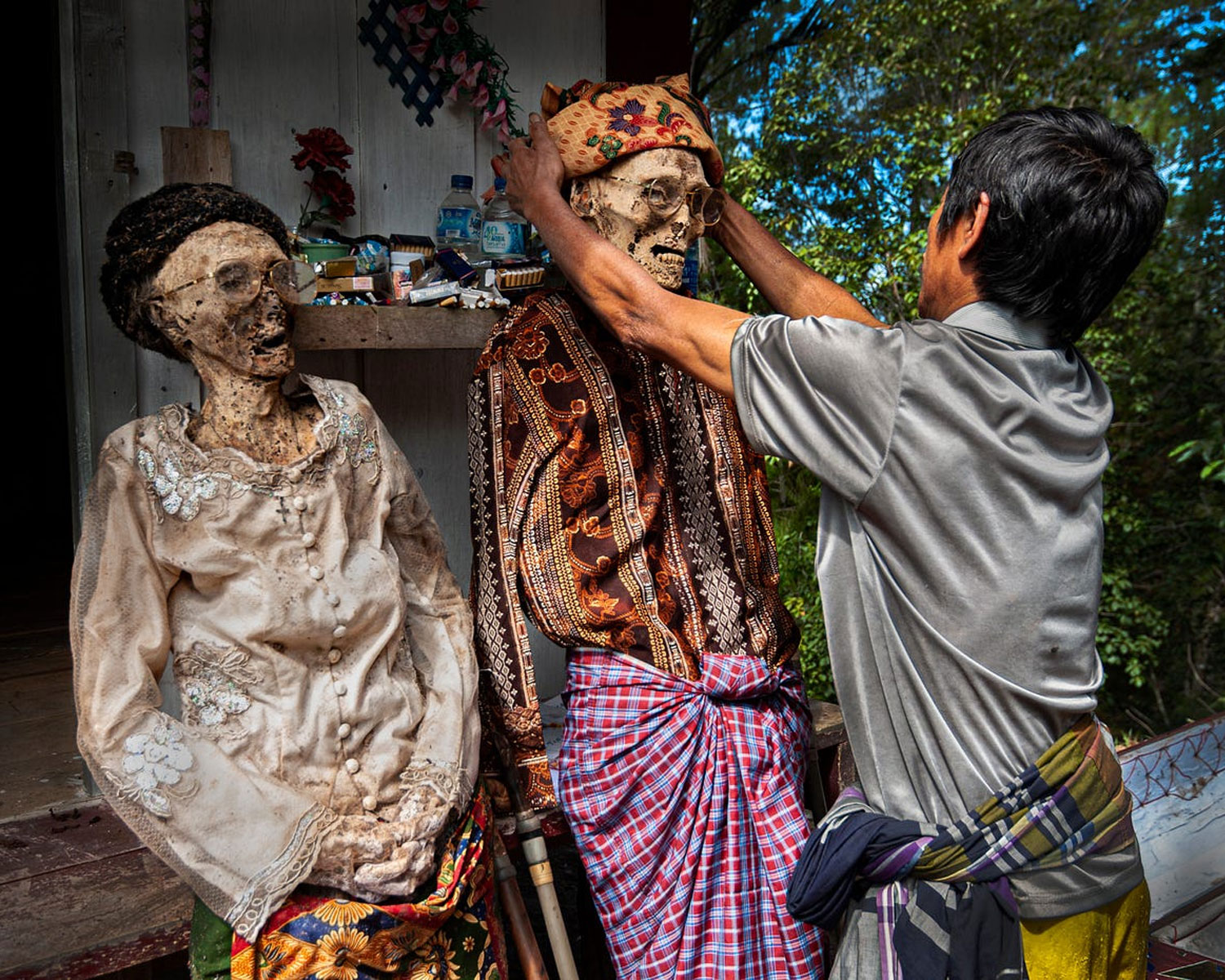
In the remote Toraja region of Indonesia’s Sulawesi island, the ancient Ma’nene ritual continues to thrive, allowing families to reconnect with their deceased loved ones in a deeply rooted cultural tradition.
Yosefina Tumanan, a resident of this mountainous area, recently expressed her joy as she addressed the skeletal remains of her sister-in-law, who passed away six years ago. “You look so beautiful!” she exclaimed, as if speaking to the living, during the Ma’nene ritual.
Ma’nene, a centuries-old tradition, involves families visiting the tombs of their ancestors, cleaning their remains, and replenishing their coffins with personal belongings. This ritual, deeply rooted in animistic beliefs, serves as a reunion for families, where the dead are treated as though they are still part of the living community.
The Toraja people, predominantly Christian, maintain this practice as part of their unique cultural identity. Unlike other cultures where death signifies a final separation, the Torajans view it as a continuation of the bond between the living and the dead.
In Torajan culture, the deceased are often mummified and kept in ornate coffins, sometimes remaining in the family home for months or even years before a grand funeral is arranged. Once the family gathers and sufficient resources are available, a funeral ceremony known as ‘Rambu Solo’ takes place. This event involves the entire village, with sacrificial buffaloes and pigs offered, and the deceased honored with a chaotic yet emotional procession to their final resting place.
The Ma’nene ritual stands as a powerful reminder of the enduring connections between the living and the dead, reflecting the deep cultural heritage of the Toraja people in Indonesia.