

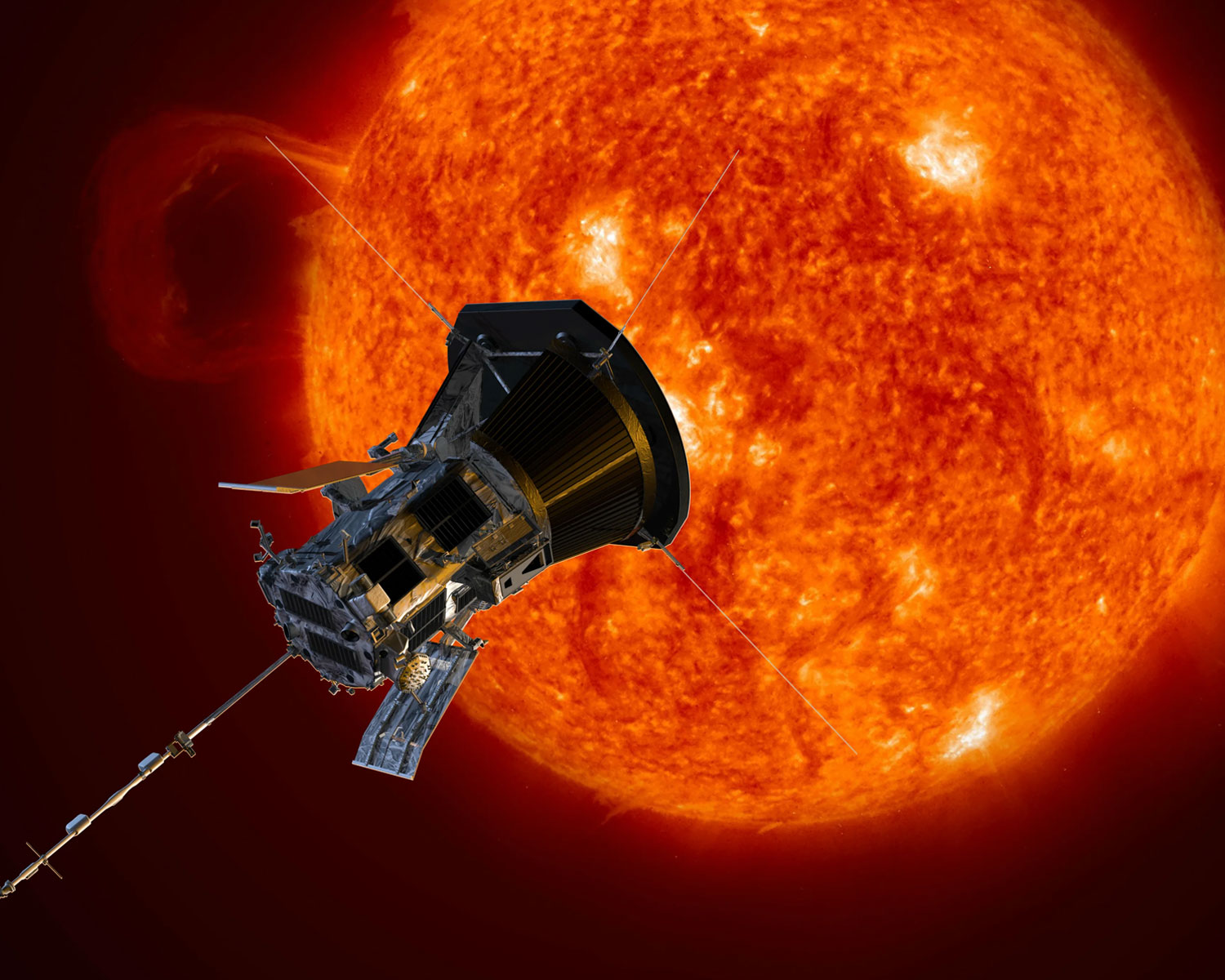
NASA’s Parker Solar Probe is about to make its closest-ever pass of the Sun, a milestone that will bring scientists closer than ever to understanding the mysteries of our solar system’s star. The spacecraft, launched in 2018, will approach the Sun at a distance of just 4 million miles, a record-breaking feat that will provide unprecedented data on the Sun’s outer atmosphere, or corona.
This historic flyby, scheduled for December 2024, is part of Parker Solar Probe’s seven-year mission to study the Sun’s magnetic fields, solar winds, and the processes driving solar activity. The probe’s instruments will measure the solar wind and particle streams, providing valuable insights into space weather, which impacts everything from communication satellites to Earth’s power grids.
Scientists are especially eager to explore the Sun’s mysterious corona, which is far hotter than the surface of the Sun itself, a paradox that has puzzled researchers for decades. With the closest-ever pass, Parker will be able to gather critical data to help answer this and other pressing questions.
The data collected during this historic encounter will not only advance our understanding of the Sun’s behavior but also help prepare for future space missions and mitigate the risks of solar storms on Earth.