
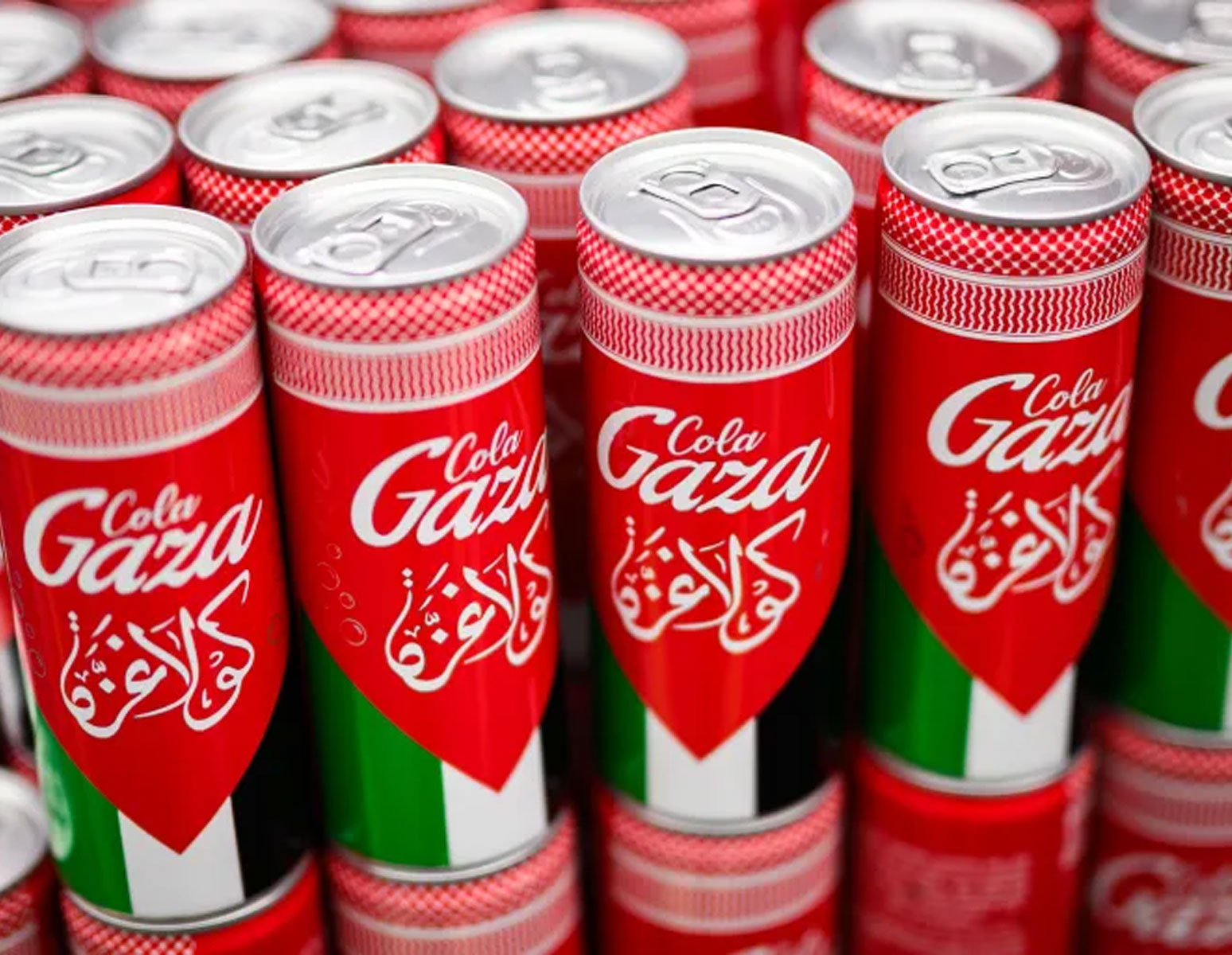
In the wake of global boycotts targeting brands associated with Israel’s actions in Gaza, Osama Qashoo, a London-based entrepreneur, has introduced Gaza Cola—a new alternative to Coca-Cola. Qashoo, the founder of the fast-food chain Hiba Express, created the beverage in November 2023 to channel support for Palestine through commerce.
According to Al Jazeera, Gaza Cola has a flavor profile resembling traditional colas but is made from a unique formula. Qashoo emphasized that profits from the drink are being donated to rebuild the maternity ward of al-Karama Hospital in Gaza City, a critical facility impacted by ongoing hostilities.
“Every can of Gaza Cola sold supports rebuilding Gaza and hits back at corporations complicit in funding aggression,” Qashoo remarked. He also envisions the cola as a catalyst for expanding the boycott movement against Coca-Cola, which has faced renewed criticism for its ties to Israel, including operations in the Atarot industrial settlement in East Jerusalem.
Initially sold at Hiba Express and other Palestinian-owned eateries, Gaza Cola has quickly gained traction, with 500,000 cans sold since August 2023. Manchester-based retailer Al Aqsa has seen its stock depleted due to high demand, reflecting the drink’s growing popularity among consumers aligned with the boycott.
The initiative is deeply personal for Qashoo, who spoke of his grief and uncertainty about family members in Gaza, including his adopted 17-year-old son, who was severely injured in the West Bank. “I have family in Gaza who have been decimated,” Qashoo shared, emphasizing the humanitarian mission behind his project.
Boycotts of Coca-Cola and PepsiCo are not new, but they have intensified since the outbreak of the current conflict in October 2023. Many consumers cite decades of U.S. support for Israel and corporate operations in contested territories as reasons for the ongoing backlash. In Pakistan, for instance, local brands have seen increased popularity, with schools, restaurants, and student groups joining the boycott.
Historically, Coca-Cola faced an Arab League boycott lasting from the 1960s to the 1990s for its Israeli operations, which allowed Pepsi to dominate markets in the Middle East. Despite these past challenges, Coca-Cola and PepsiCo continue to face resistance in Muslim-majority countries. PepsiCo, in particular, saw backlash after acquiring SodaStream, an Israeli company, in 2018.
Qashoo’s Gaza Cola is part of a broader effort to channel consumer choices into meaningful political and humanitarian impact, underscoring the intersection of commerce and activism in times of conflict.