
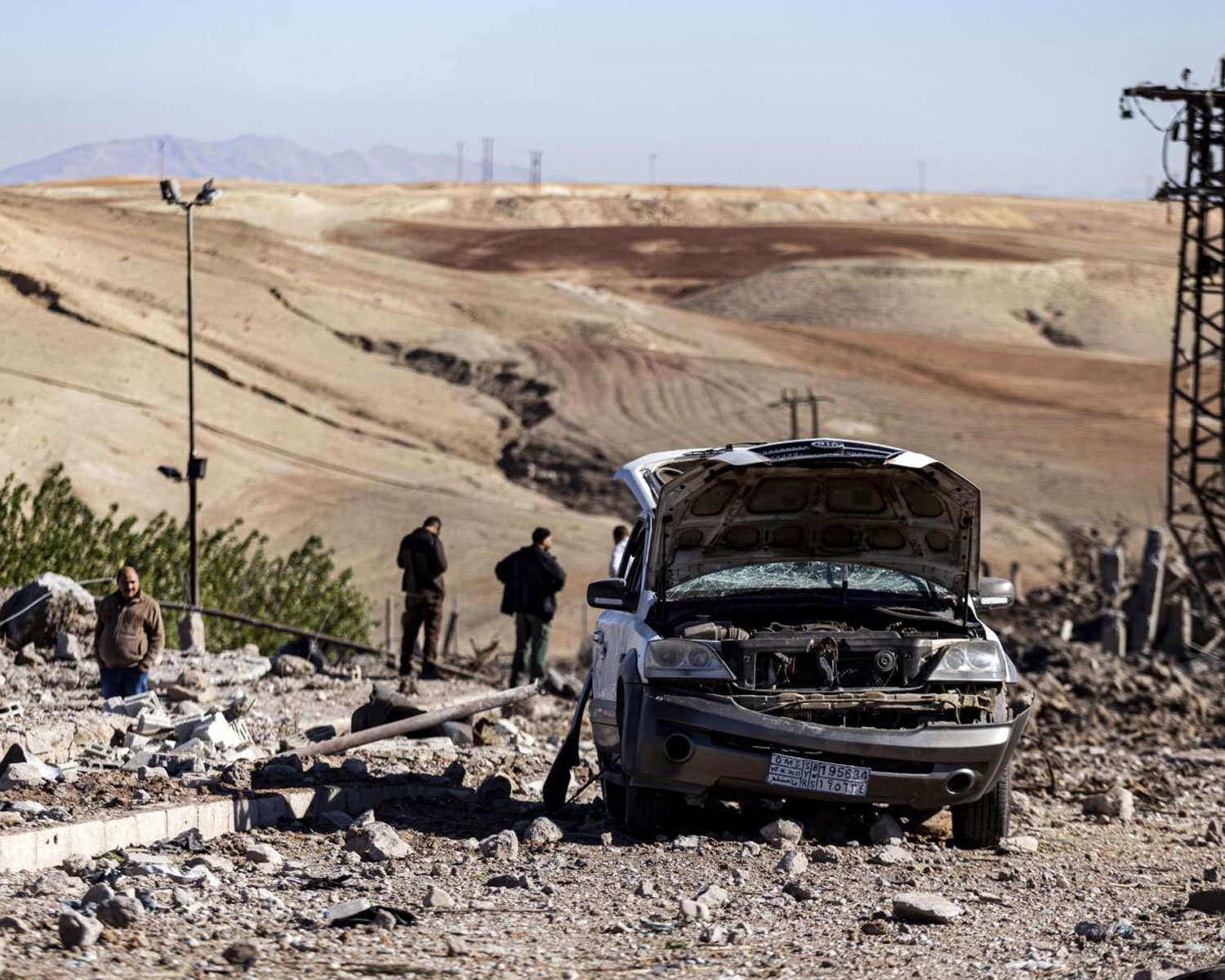
In a swift and robust response to a devastating bomb attack in Ankara, Turkey has unleashed a series of airstrikes targeting militant strongholds in northern Iraq and initiated a crackdown on suspects in Istanbul. The developments unfolded after Kurdish militants claimed responsibility for a deadly explosion in the Turkish capital, marking the first such attack in years.
On Sunday morning, two attackers detonated a bomb near government buildings in Ankara, resulting in their own deaths and injuring two police officers. The outlawed Kurdistan Workers Party (PKK) claimed responsibility for the attack.
Turkey’s defense ministry promptly launched airstrikes, which it described as actions that “neutralized” numerous militants, a term often used to indicate fatalities. These airstrikes obliterated 20 targets, including caves, shelters, and depots used by the PKK in Iraq’s Metina, Hakurk, Qandil, and Gara regions.
Turkey has escalated its military operations against the PKK in northern Iraq in recent years, asserting its right to self-defense under Article 51 of the United Nations charter.
The PKK is internationally designated as a terrorist organization by Turkey, the United States, and the European Union. The group initiated an insurgency in southeastern Turkey in 1984, leading to a conflict that has claimed the lives of more than 40,000 people.
CCTV footage obtained by Reuters captured the moment when a vehicle approached the interior ministry’s main gate in Ankara, with one of its occupants rapidly moving towards the building before being engulfed in an explosion.
One of the attackers was identified as a PKK member, while authorities are working to identify the other assailant. Explosives, grenades, a rocket launcher, and various firearms were seized at the scene. The attackers had hijacked the vehicle and killed its driver in Kayseri, a city located 260 km (161 miles) southeast of Ankara.
In the aftermath of the attack, Turkish counter-terrorism police conducted raids, resulting in the detention of 20 individuals suspected of having ties to the PKK. Among those detained were a provincial Kurdish spokesman and district leaders of a prominent pro-Kurdish political party, suspected of aiding and sheltering PKK members.
The ANF News website, which has close ties to the PKK, cited the militant group as claiming responsibility for the attack, asserting that a team from its Immortals Battalion unit had carried out the operation.
The bomb attack on Ataturk Boulevard marked the first such incident in Ankara since 2016 when a wave of attacks rocked Turkish cities, with responsibility claimed by Kurdish militants, Islamic State, and other extremist groups.
President Tayyip Erdogan addressed parliament, reaffirming Turkey’s commitment to maintaining a 30-km (19-mile) deep “security strip” beyond its southern borders with Syria and Iraq. Erdogan hinted at “new steps” in this strategy.
Turkey’s Defense Minister Yasar Guler responded to inquiries regarding a potential large-scale cross-border operation into Syria by stating that the president had not announced “anything new” in his remarks. The situation remains fluid as Turkey navigates the complex security challenges posed by militant groups in the region.