
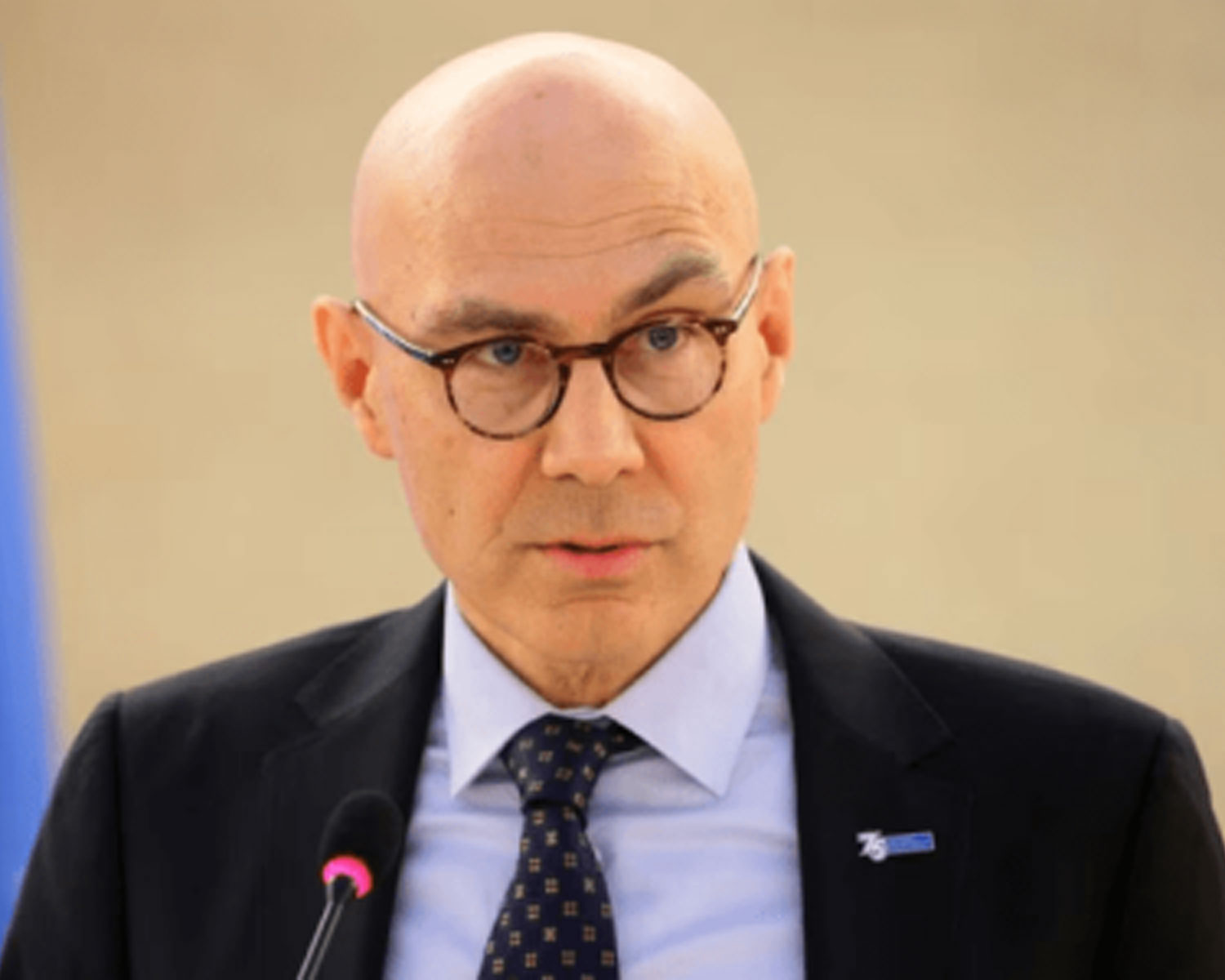
The United Nations Human Rights Chief, Volker Turk, has expressed significant concerns regarding the recently enacted 26th Constitutional Amendment in Pakistan, stating that it could “seriously undermine” the independence of the judiciary.

The amendment introduces sweeping changes to the judicial system, notably revoking the Supreme Court’s suo motu powers and allowing parliamentarians to nominate the next Chief Justice from the three most senior judges of the Supreme Court. Turk highlighted that these constitutional reforms were adopted hastily, lacking broad consultation and debate, which could jeopardize the judiciary’s autonomy. The UN Human Rights Office reiterated that constitutional reforms should align with international human rights law.
In a related statement, the International Commission of Jurists (ICJ) condemned the amendments, labeling them a “blow” to judicial independence. ICJ Secretary General Santiago Canton stated, “They erode the judiciary’s capacity to independently and effectively function as a check against excesses by other branches of the State and protect human rights.”
Following the passage of the controversial bill, the Pakistan Tehreek-e-Insaf (PTI) party vowed to initiate a decisive movement against the amendment nationwide, promising to proceed “without any fear of consequences.”
Lawyers and the Human Rights Commission of Pakistan have also raised alarms, fearing that the amendments will place the judiciary under government control. They have called for the immediate withdrawal of the amendment, warning of its potential to compromise judicial integrity.
Key changes introduced by the amendment include the removal of the high courts’ suo motu powers, the establishment of constitutional benches, and performance evaluations of high court judges. Furthermore, it grants the Supreme Court the authority to transfer any case to itself and involves a federal minister and a senior counsel in the appointment process for the Islamabad High Court’s top judge.
The developments continue to spark widespread debate about the future of judicial independence in Pakistan amidst growing concerns over the implications for human rights and governance.